
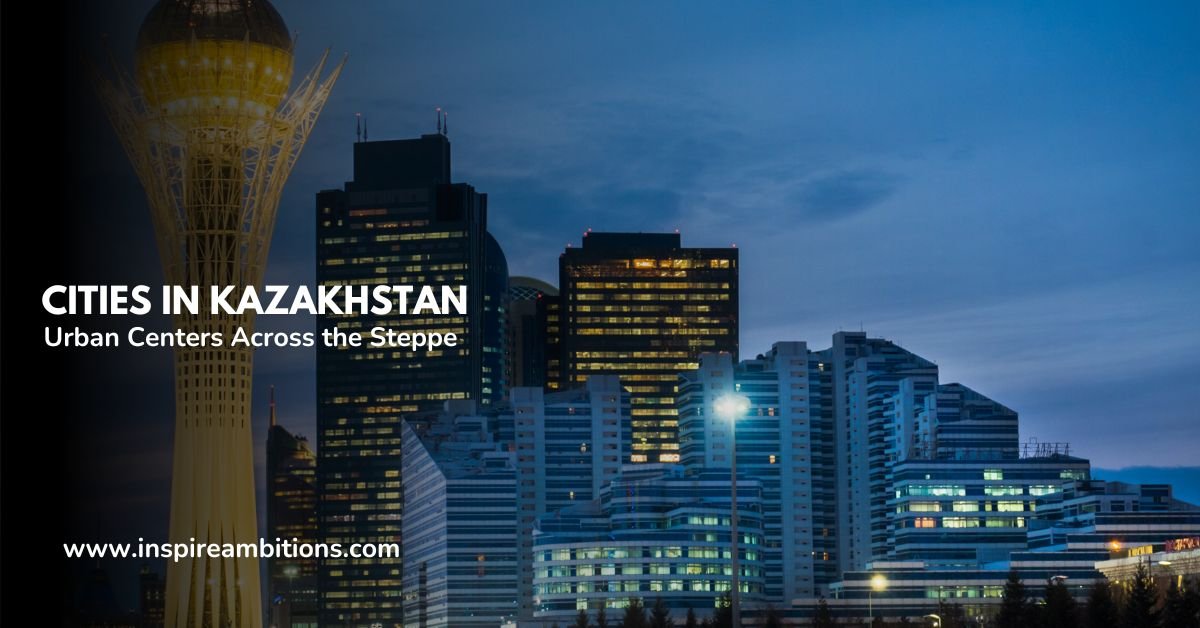
Kazakhstan, the world’s ninth-largest country, is a land of vast contrasts — where modern architecture rises above ancient steppe traditions. Over the past few decades, this Central Asian powerhouse has undergone rapid transformation. As the nation continues its ambitious modernization drive, its cities have become symbols of progress, innovation, and cultural diversity.
With over half of Kazakhstan’s population now living in urban areas, cities like Almaty, Nur-Sultan (Astana), and Shymkent showcase the country’s ongoing evolution from a resource-based economy to a modern, globally connected society.
Key Takeaways
- Kazakhstan’s cities are thriving centers of culture, innovation, and economic growth.
- Almaty and Nur-Sultan lead the nation’s modernization and global integration.
- Industrial cities like Shymkent and Karaganda drive economic momentum.
- Historical hubs such as Turkistan preserve Kazakhstan’s rich cultural legacy.
Major Cities and Regions
Kazakhstan’s cities each tell a story — from ancient Silk Road crossroads to futuristic skylines. The country’s regional diversity mirrors its ambitious development vision.
Almaty: The Cultural and Commercial Capital
Formerly known as Alma-Ata, Almaty remains Kazakhstan’s largest and most dynamic city. Nestled in the foothills of the Trans-Ili Alatau mountains, it is the country’s financial and cultural heartbeat.
- Role: Commercial and cultural hub of Kazakhstan.
- Highlights: Modern business districts, museums, art galleries, and universities.
- Lifestyle: A blend of cosmopolitan living, scenic landscapes, and café culture.
Almaty’s unique mix of mountain vistas and urban energy continues to attract young professionals and entrepreneurs.
Nur-Sultan (Astana): The Modern Capital
Renamed Nur-Sultan in honor of Kazakhstan’s first president, this purpose-built capital reflects the nation’s bold future. Established as the capital in 1997, it represents Kazakhstan’s vision of progress and innovation.
- Location: Akmola Region, central Kazakhstan.
- Architecture: Iconic landmarks like the Bayterek Tower and the Khan Shatyr Center.
- Function: Administrative and political hub.
With futuristic skylines, smart city infrastructure, and eco-urban planning, Nur-Sultan exemplifies Kazakhstan’s commitment to modernization.
Shymkent: Industrial and Economic Growth
Located in southern Kazakhstan, Shymkent is one of the country’s fastest-growing cities. Once an industrial stronghold, it has evolved into a vibrant economic hub known for oil refining, manufacturing, and trade.
- Economy: Driven by petrochemicals, agriculture, and logistics.
- Population: Over 1 million residents and expanding rapidly.
- Culture: Known for hospitality, markets, and southern Kazakh traditions.
Shymkent’s strategic position near Uzbekistan makes it a key player in cross-border trade and investment.
Karaganda: The Heart of Kazakhstan’s Mining Industry
In the Karagandy Region, Karaganda has long been the center of the country’s coal and metallurgical industries. The city symbolizes Kazakhstan’s industrial resilience and the enduring spirit of its workforce.
- Economic base: Mining, metallurgy, and engineering.
- Urban renewal: Infrastructure and housing modernization programs.
- Heritage: Soviet-era architecture meets emerging business districts.
Turkistan and Taraz: Cultural and Historical Heritage
Both Turkistan and Taraz are deeply rooted in Kazakhstan’s history. Once key stops along the Silk Road, these cities preserve centuries of cultural exchange.
- Turkistan: Home to the Mausoleum of Khoja Ahmed Yasawi, a UNESCO World Heritage Site.
- Taraz: Ancient city known for archaeological sites and early trade history.
Their historical depth contrasts beautifully with Kazakhstan’s modern urban development.
Emerging Urban Centers
Beyond the well-known metropolises, smaller cities like Aktobe, Pavlodar, Kostanay, and Atyrau illustrate Kazakhstan’s regional growth.
- Aktobe: Industrial hub with a focus on energy and metallurgy.
- Atyrau: Gateway to the Caspian Sea and oil capital of western Kazakhstan.
- Pavlodar: Known for its chemical and aluminum industries.
- Kostanay: Balances agriculture and growing urbanization.
Each of these cities contributes uniquely to the nation’s balanced regional development strategy.
Demographics and Urban Planning
Urban Population Growth
Kazakhstan’s urban population continues to expand rapidly as rural-to-urban migration accelerates. The government’s National Urbanization Strategy focuses on sustainability, smart planning, and improved living standards.
Key urban growth centers include:
- Stepnogorsk and Taldykorgan – developing infrastructure and new housing.
- Ekibastuz and Karatau – modernizing industrial operations.
- Kokshetau, Ridder, and Petropavl – regional hubs with growing populations.
Smart City Initiatives
Kazakhstan’s Modernization Program emphasizes sustainable and high-tech development:
- Green infrastructure: Smart energy use and eco-friendly public transport.
- Innovation clusters: Linking education, technology, and industry.
- Revitalization projects: Upgrading older urban areas with modern amenities.
Cities like Atyrau and Karatau are piloting clean energy and smart governance systems, reflecting Kazakhstan’s vision of an intelligent, sustainable future.
Balancing Heritage and Progress
From the space-age city of Baikonur, home to the world’s oldest operational cosmodrome, to ancient trade cities reborn as cultural capitals, Kazakhstan’s cities bridge the gap between the past and future.
This balance of heritage preservation and technological innovation defines the nation’s approach to urban transformation — a testament to Kazakhstan’s ambition to become a modern Eurasian powerhouse.
Conclusion: Kazakhstan’s Cities at the Crossroads of Change
Kazakhstan’s cities tell a remarkable story — one of resilience, innovation, and renewal. From Almaty’s alpine charm to Nur-Sultan’s futuristic skyline, each urban center contributes to shaping the nation’s evolving identity.
As urbanization accelerates, Kazakhstan stands poised to lead Central Asia in smart growth, sustainable development, and cultural renaissance. For residents and visitors alike, its cities offer a powerful glimpse into a country confidently merging tradition with transformation.