
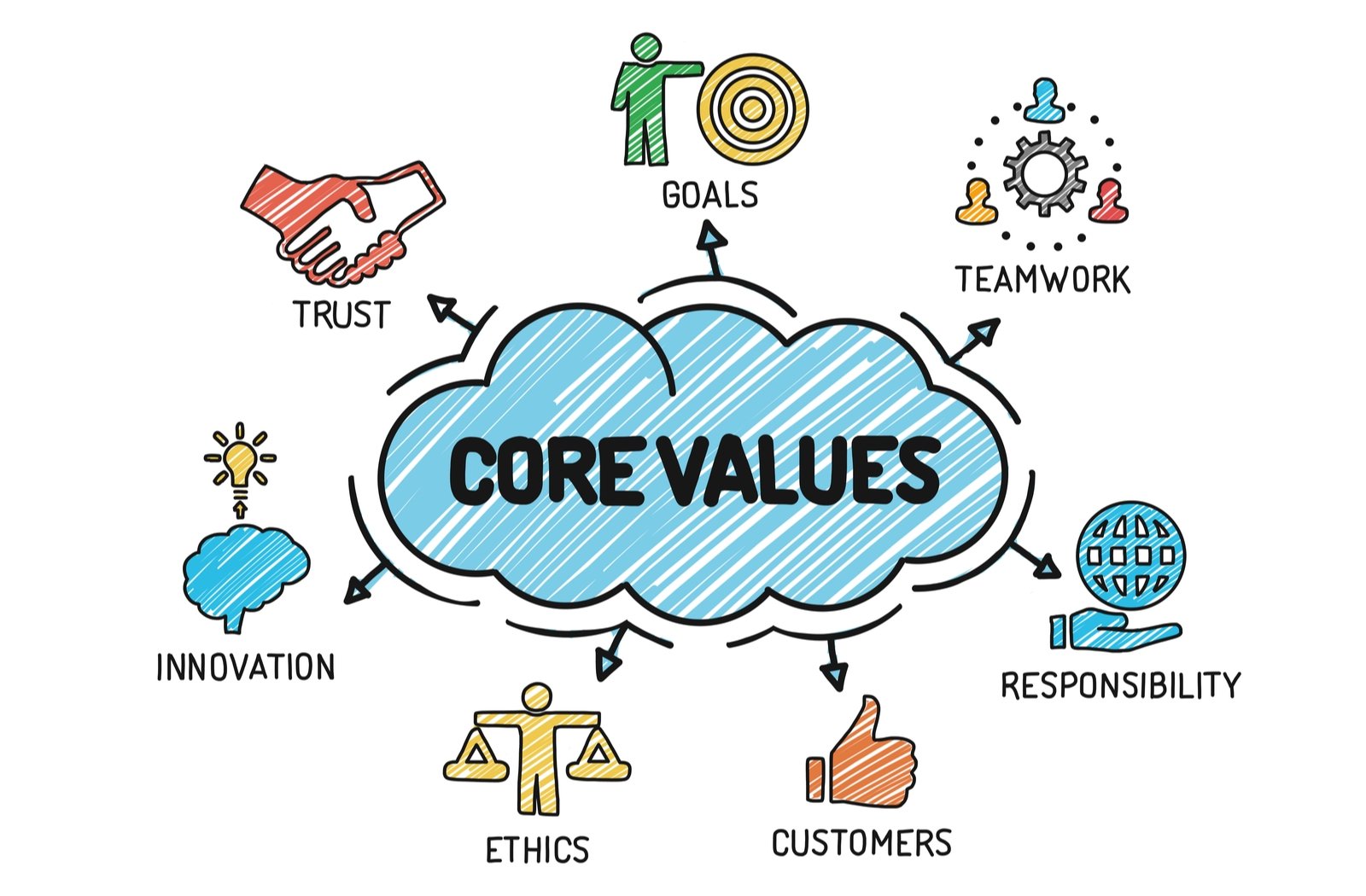
Core values are the guiding principles that shape behaviour, decision-making, and identity — both for individuals and organizations. In today’s competitive and fast-changing business world, companies with clear, authentic core values stand out by cultivating trust, consistency, and purpose.
Well-defined values align a company’s mission and vision with its culture and operations. They shape how employees interact, influence brand reputation, and guide strategic choices. For individuals, personal values create clarity and direction in career and life decisions.
Understanding Core Values
Core values are the beliefs that define who you are and what you stand for. In business, they form the foundation of corporate culture and determine how a company treats its employees, customers, and community.
Recommended Reading
Want to accelerate your career? Get Kim Kiyingi’s From Campus to Career – the step-by-step guide to landing internships and building your professional path. Browse all books →
Companies grounded in respect, integrity, honesty, and collaboration tend to build inclusive and transparent environments that foster trust and engagement. Similarly, values like innovation, creativity, and passion fuel adaptability and long-term growth.
In the modern global marketplace, diversity and inclusion have become vital. Organizations that embrace multiple perspectives see greater creativity and innovation. Teamwork and communication remain the backbone of success, driving efficiency and shared achievement.
Ultimately, living by these values creates positive workplace cultures that attract top talent and loyal customers — turning values from words on a wall into a source of measurable success.
Core Value Examples in Business
Every successful organization builds around values that reflect its identity. Below are examples of widely adopted business core values:
Integrity
Integrity means acting with honesty, fairness, and transparency. Companies that value integrity earn the trust of customers and partners. This reputation builds credibility and ensures ethical conduct across all business dealings.
Innovation
Innovation drives progress. Businesses that encourage experimentation, embrace new ideas, and adapt quickly are better equipped to thrive in a constantly evolving market. Innovation as a value keeps teams curious and future-focused.
Teamwork
Teamwork highlights collaboration, empathy, and shared responsibility. A strong team culture enhances problem-solving, communication, and morale — leading to higher productivity and collective success.
Accountability
Accountability empowers employees to own their actions and results. Organizations that promote accountability foster responsibility, strengthen relationships, and inspire confidence among customers and stakeholders.
Quality
Quality reflects a company’s commitment to excellence in every product, service, and interaction. Brands that prioritize quality earn lasting customer loyalty and distinguish themselves from competitors.
By defining and consistently living these principles, businesses build resilient cultures that support long-term success, innovation, and trust.
Core Value Examples in Personal Life
Core values extend beyond business—they define how individuals act and make decisions. Living by your values ensures authenticity and fulfillment.
Common personal core values include:
- Respect – Treating others with dignity and empathy.
- Integrity – Acting honestly in all situations.
- Compassion – Showing care and understanding toward others.
- Passion – Pursuing meaningful goals with energy and enthusiasm.
- Courage – Facing challenges with confidence and resilience.
- Balance – Prioritizing well-being and a healthy work-life rhythm.
- Community – Contributing to and engaging with others for the common good.
- Growth – Continuously learning and improving.
- Gratitude – Appreciating people, opportunities, and experiences.
- Authenticity – Staying true to who you are in all settings.
When individuals identify and honour their personal values, they make clearer choices, build stronger relationships, and live with greater purpose.
How to Identify Core Values
Identifying your core values requires self-reflection and honesty. Here’s how to start:
- Reflect on Key Experiences: Consider moments when you felt proud, fulfilled, or frustrated—these reveal what matters most to you.
- Define Priorities: Identify what you consistently protect—family, creativity, health, or success.
- Recognize Motivations: Determine what drives your actions—service, recognition, stability, or growth.
- Observe Behaviours: Notice how you naturally act under pressure; consistent patterns indicate your true values.
- List and Refine: Write down your top values and narrow them to 5–7 that truly define you.
Once identified, use your values as a filter for career choices, partnerships, and daily decisions.
Implementing Core Values in Business
Defining core values is only the beginning — implementation turns them into lived culture.
1. Define and Communicate
Start by crafting unique, authentic values aligned with your mission. Communicate them clearly through onboarding, internal communication, and branding.
2. Integrate into Company Culture
Embed values in every process — hiring, performance reviews, and decision-making. For example, if teamwork is a value, design roles and rewards that encourage collaboration.
3. Lead by Example
Leaders set the tone. When leaders act with transparency and accountability, employees are more likely to embody those same behaviours.
4. Empower Employees
Encourage employees to make decisions aligned with the company’s principles. Empowerment fuels creativity, ownership, and engagement.
5. Measure and Review
Assess how well your organization lives its values through feedback, performance metrics, and employee engagement surveys. Refine your values as your business evolves.
By consistently living your values, your company builds trust, cohesion, and innovation — the hallmarks of sustainable success.
Conclusion
Core values are more than aspirational words — they are the moral and strategic compass that guides both personal and professional growth. For businesses, they define culture, inspire loyalty, and strengthen brand integrity. For individuals, they clarify purpose and direction.
By defining, living, and reinforcing your core values, you create a foundation for lasting success built on authenticity, trust, and shared purpose.