
Beyond its gleaming skyline, Singapore is a living museum of stories that reveal its evolution through time. From colonial architecture to cultural landmarks, the nation’s historic sites stand as timeless guardians of its identity. Visitors who wander through these landmarks are transported into eras that shaped Singapore’s heritage and progress.
Historic Highlights of Singapore
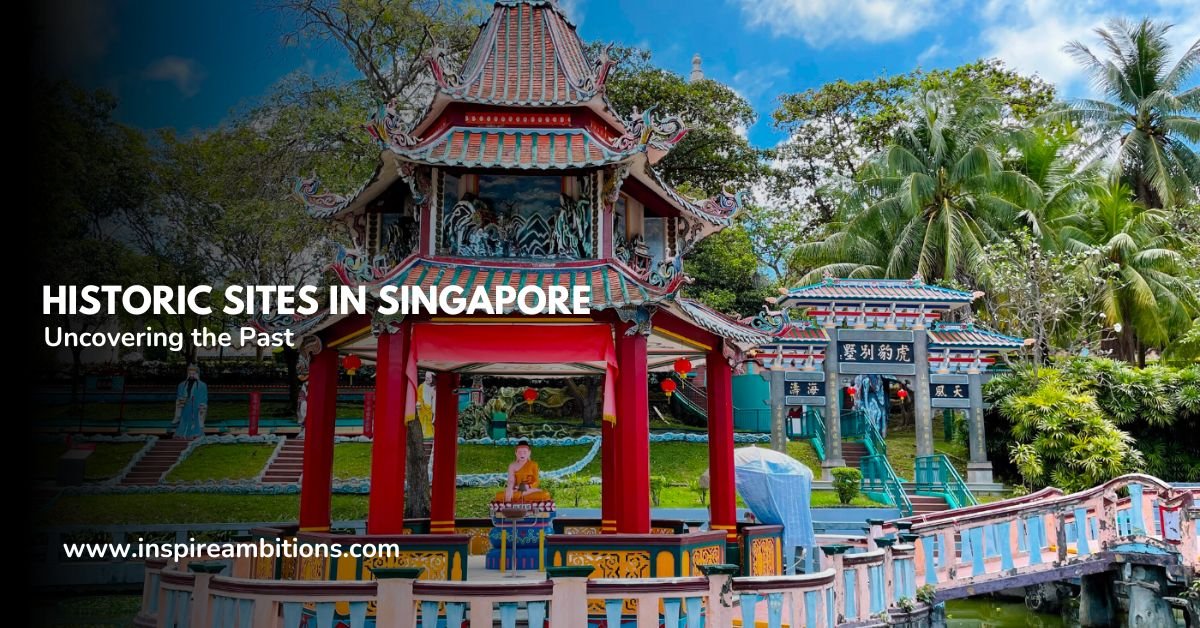
Haw Par Villa
A cultural park famous for its vivid dioramas, Haw Par Villa captures the moral lessons and mythological tales of traditional Chinese folklore. It’s a visual journey through Asia’s storytelling traditions.
CHIJMES
Once a convent and school, CHIJMES beautifully blends Gothic architecture with modern lifestyle spaces. Today, it stands as a prime example of how Singapore preserves its colonial charm while embracing modern vibrancy.
Raffles Hotel
An icon of colonial luxury, Raffles Hotel symbolizes Singapore’s transformation from a trading post into a global hub of hospitality. Its storied walls have hosted dignitaries and literary legends alike.
Historical Context of Singapore
Pre-Colonial and Colonial Era
Long before British colonization, 14th-century Singapore was a flourishing maritime hub known as “Temasek.” Its strategic location later attracted the British, and in 1819, Sir Stamford Raffles established it as a trading post — setting the stage for rapid modernization.
World War II and the Japanese Occupation
From 1942 to 1945, Singapore endured Japanese occupation — a painful chapter that reshaped national identity. The fall of the British military and civilian suffering during this period ignited a desire for self-rule and resilience among locals.
The Road to Independence
After the war, the spirit of self-determination grew stronger. Under Lee Kuan Yew’s leadership, Singapore gained self-government in 1959 and full independence on 9 August 1965, paving the way for its transformation into one of the most successful nations in the world.
National Monuments and Memorials
Kranji War Memorial
A solemn tribute to soldiers who perished during World War II, the memorial’s peaceful grounds commemorate both military personnel and civilians.
Civilian War Memorial
Standing tall in the heart of the city, this landmark honors thousands of civilians who lost their lives during the Japanese occupation — symbolizing unity across ethnic communities.
Old Hill Street Police Station
Once the largest government building in colonial Singapore, this colorful landmark now represents the city’s progress in governance and public service.
Fort Canning Park
A hilltop park that was once the seat of Malay royalty and later a British command center. Today, it remains one of Singapore’s most significant historical sites.
Religious Heritage and Architectural Marvels
Sultan Mosque
Located in Kampong Glam, this mosque is a masterpiece of Islamic architecture and a vibrant symbol of Singapore’s religious harmony.
Thian Hock Keng Temple
One of the oldest Hokkien temples in Singapore, it showcases intricate carvings and traditional craftsmanship, representing the devotion of Chinese seafarers who once prayed here for safe voyages.
Religious Heritage and Architectural Marvels
Sultan Mosque
Located in Kampong Glam, this mosque is a masterpiece of Islamic architecture and a vibrant symbol of Singapore’s religious harmony.
Thian Hock Keng Temple
One of the oldest Hokkien temples in Singapore, it showcases intricate carvings and traditional craftsmanship, representing the devotion of Chinese seafarers who once prayed here for safe voyages.
Preservation and Community Engagement
Singapore’s commitment to heritage preservation is both structured and community-driven, ensuring that its past remains part of its present.
Cultural and Historical Preservation
The National Heritage Board (NHB) leads efforts to safeguard monuments and sites through its Preservation of Sites and Monuments Division.
Initiatives like the SG Heritage Plan ensure that both tangible (buildings) and intangible (traditions, crafts) heritage continue to thrive, while some sites aspire for recognition under UNESCO’s World Heritage List.
Educational Outreach and Volunteering
Community participation plays a vital role in keeping heritage alive.
Through education grants, docent programs, and volunteer storytelling initiatives, locals and visitors can actively engage in Singapore’s living history — transforming passive observation into cultural participation.
Historic Sites and Museums
National Museum of Singapore
The city’s largest and oldest museum offers immersive exhibitions on Singapore’s evolution, with permanent galleries dedicated to culture, innovation, and the life of Lee Kuan Yew.
The Battlebox (Fort Canning)
A preserved World War II underground command center that reveals the strategic decisions behind the fall of Singapore — offering visitors a powerful glimpse into wartime history.
Kranji War Memorial & Kent Ridge Park
Both sites invite quiet reflection on sacrifice and valor.
Kent Ridge Park marks the site of the Battle of Pasir Panjang, one of Singapore’s fiercest WWII battles.
Conclusion
Exploring Singapore’s historic sites is more than sightseeing — it’s a journey into the nation’s soul.
Every monument, museum, and memorial offers a narrative of perseverance, unity, and transformation. As Singapore continues to innovate, its respect for history ensures that the legacy of its past remains deeply intertwined with its modern identity.