
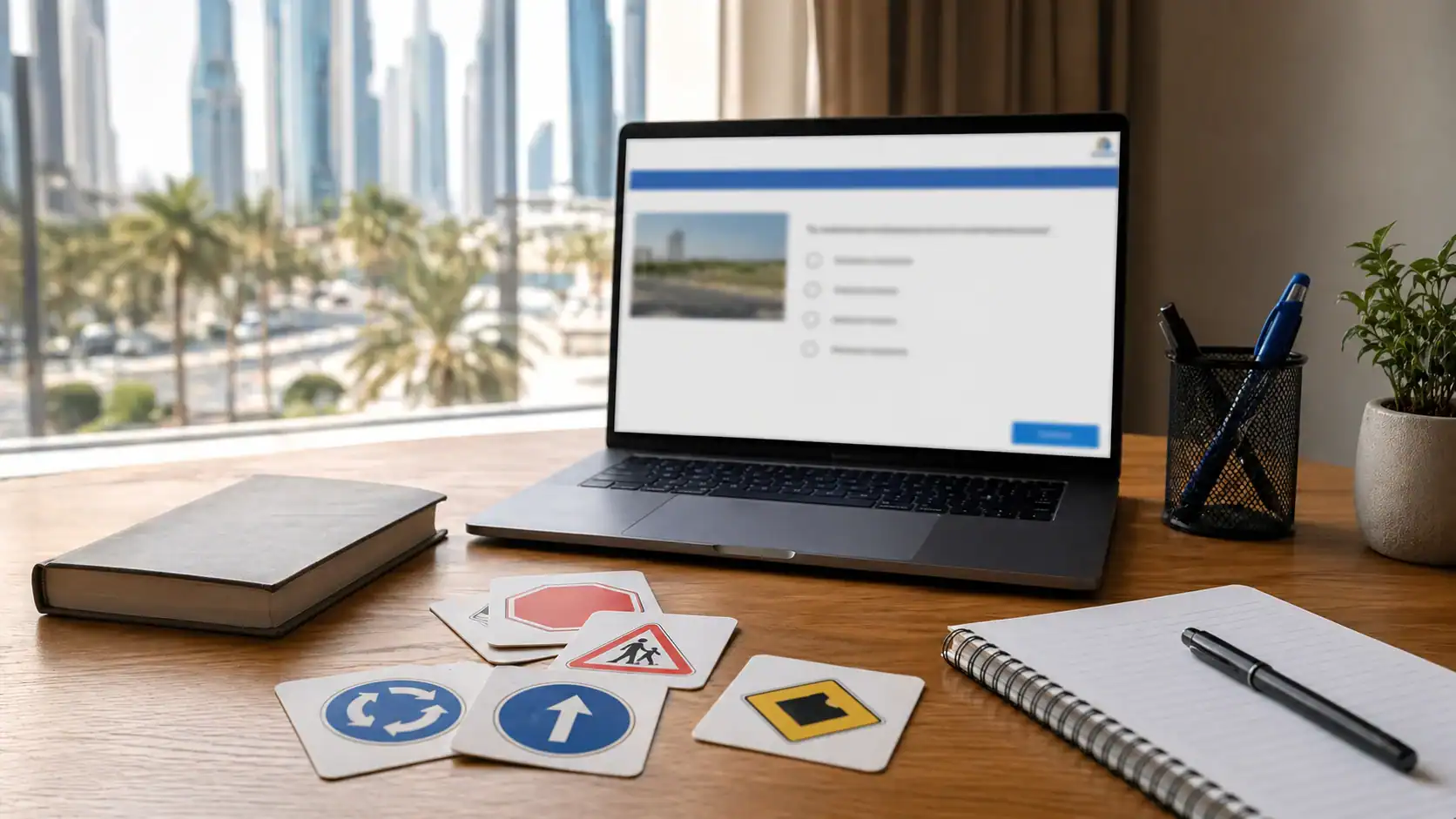
An RTA theory test mock exam should not become a memory game.
That is where many learners waste time.
They repeat the same practice questions until the answer feels familiar. Then the real test changes the wording, adds a road sign, or asks about the safest response in a slightly different situation. The learner knew the practice question. They did not understand the rule.
Recommended Reading
Want to accelerate your career? Get Kim Kiyingi’s From Campus to Career – the step-by-step guide to landing internships and building your professional path. Browse all books →
A mock exam can help you pass the Dubai driving theory test, but only if you use it properly.
This guide explains how to use mock exams, what to study before you take one, which mistakes to avoid, and how to prepare without trusting random apps more than the official RTA process.
Quick Answer: What Is An RTA Theory Test Mock Exam?
An RTA theory test mock exam is a practice test that helps learner drivers prepare for the Dubai driving theory test before booking or sitting the real exam.
Good mock exams test traffic signs, road rules, safe driving decisions, lane discipline, hazard awareness, vehicle control, pedestrian safety, and basic driving responsibilities.
A mock exam is not the official test. It does not replace RTA guidance, driving school lessons, or the official materials used for your licence category.
Treat it as a rehearsal. Not as proof that you are ready.
Start With The Official RTA Process
Before you use any practice website or app, understand the official route.
Dubai driving licence services sit under the Roads and Transport Authority. RTA’s official digital services and the RTA Dubai app allow customers to manage several traffic and driving-related services, including licence and vehicle services.
That matters because many search results for “RTA theory test mock exam” are unofficial. Some are useful practice tools. Some are outdated. Some use RTA wording in the title even when they are not connected to the Roads and Transport Authority.
Use the official RTA website, your registered driving school, and official learning materials as the base. Use mock exams only to check whether you understand the material.
What A Mock Exam Should Test
A useful mock exam should not only ask easy sign questions.
It should test the areas that decide whether a learner driver can think safely on Dubai roads.
- Traffic signs and road markings.
- Speed limits and safe following distance.
- Roundabouts, junctions, lane changes, and merging.
- Pedestrian crossings and school-zone behaviour.
- Emergency vehicles and breakdown situations.
- Seat belts, mobile phone use, and basic vehicle safety.
- Hazard perception and defensive driving decisions.
If a mock exam only tests repeated questions without explanation, it gives you weak feedback. The strongest mock exams show why an answer is right and why the other options are unsafe.
That explanation is where the learning happens.
How To Use A Mock Exam Properly
Take your first mock exam before you feel ready.
That sounds strange, but it gives you a baseline. Do not use the first result to judge yourself. Use it to find the weak areas.
After the first attempt, sort your wrong answers into groups. Signs. Lane rules. Speed and distance. Parking. Hazard response. Road etiquette. Then study the weakest group first.
Do not retake the same mock exam immediately. That only tests short-term memory. Study the rule, explain it in your own words, then take another mock exam later.
A good pattern looks like this:
- Day 1: Take a mock exam and record weak areas.
- Day 2: Study road signs and road markings.
- Day 3: Study priority rules, lanes, merging, and junctions.
- Day 4: Study hazards, emergency situations, and safe responses.
- Day 5: Take a fresh mock exam under timed conditions.
- Day 6: Review only the mistakes.
- Day 7: Take one final mock exam without notes.
This is better than taking ten mock exams in one evening and learning nothing from the wrong answers.
The Mistake Most Learners Make
Most learners treat the mock exam score as the goal.
The score is only a signal.
If you pass because you memorised the same question set, your score is fragile. If you pass because you understand the rule behind each answer, your score is stronger.
This matters in Dubai because the driving environment demands quick judgement. Busy roads, lane discipline, fast-moving traffic, delivery riders, pedestrians, taxis, buses, and roadworks all place pressure on new drivers.
The theory test is not there to irritate you. It checks whether you can make safer decisions before you control a vehicle on the road.
How To Choose A Practice App Or Website
Be careful with apps.
Some app listings clearly say they are unofficial practice tools and not affiliated with RTA. That honesty is useful. Other tools use official-sounding names without making the relationship clear enough.
Before you trust a practice app, check four things.
First, does it state whether it is official or unofficial? Second, does it show when it was last updated? Third, does it explain answers, not only mark them right or wrong? Fourth, does it cover the vehicle category and language you need?
Do not pay for any app only because it claims to guarantee a pass. No practice tool can guarantee your result on the official exam.
What To Do If You Keep Failing Mock Exams
If you keep failing, stop repeating the test.
Repeating failure without study only trains frustration.
Go back to the category that keeps breaking your score. If signs are the issue, create a sign sheet and test yourself daily. If hazard questions are the issue, practise explaining the safest response out loud. If lane or junction questions are the issue, draw the road situation on paper and mark who moves first.
Also check language. Many learners know the rule but lose marks because the question wording confuses them. If English is not your strongest test language, ask your driving school what language options are available for your licence category.
The goal is not to feel smart during practice. The goal is to remove the weak area before the official test.
Final Prep Before The Real Test
The day before the real test, stop chasing new material.
Review your mistake list. Review signs. Review rules that involve safety decisions. Sleep properly. Arrive with the required documents and follow your driving school’s instructions.
Do not sit the real test after a night of panic practice. Tired learners misread simple questions.
If you want a wider preparation guide, read our RTA practice theory test article. For test-day confidence, our guide on RTA driving test practice can help with the next stage.
Final Answer
An RTA theory test mock exam is useful only when it teaches the rule behind the answer.
Use mock exams to find weak areas, study those areas properly, and retest under timed conditions. Do not depend on repeated questions, unofficial apps, or pass-guarantee claims.
The safest learner is not the one who remembers the most answers. It is the one who understands what the road is asking them to do.
For more UAE driving and career guides, explore Inspire Ambitions and subscribe for future updates.
Sources: Dubai Roads and Transport Authority, RTA Dubai app information, official driving school guidance, UAE light vehicle learning materials, and practice-app disclaimers from major app stores.